

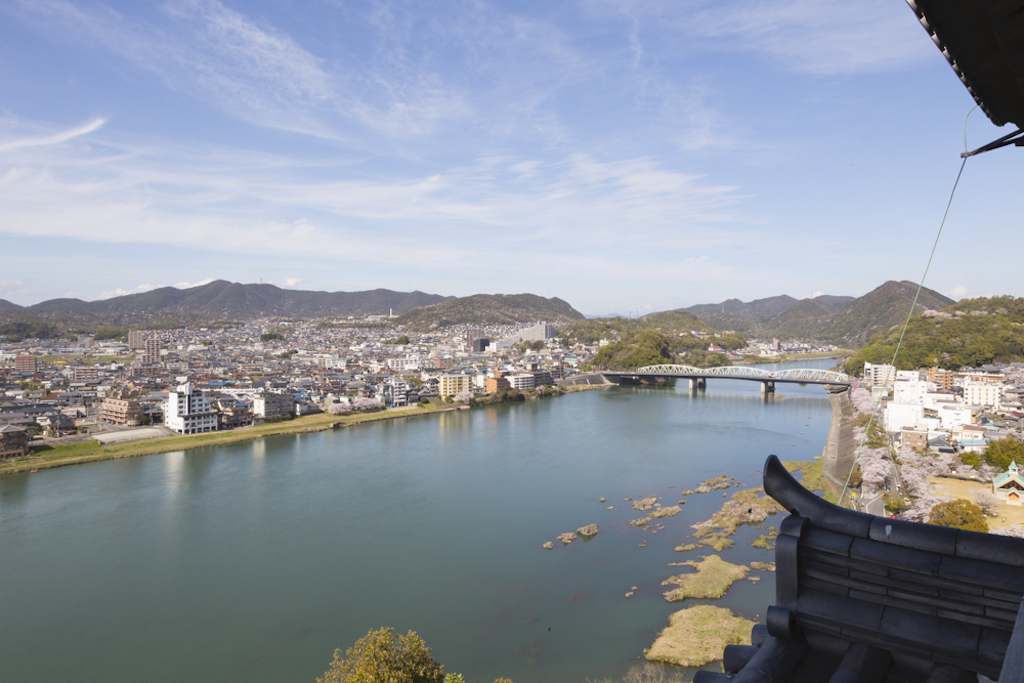
Inuyama Castle, a beautiful National Treasure, stands on a hill on the border of Aichi and Gifu prefectures, overlooking the gently flowing Kiso River. The castle, which has Japan’s oldest surviving bōrōgata main keep, is believed to have been built in 1537 by Oda Nobuyasu, uncle of renowned warlord, Oda Nobunaga. Efforts to preserve the legacy of this castle, with its rare and remarkable history, are led by Junko Naruse, daughter of Masatoshi Naruse, the 12th lord of Inuyama Castle, and often referred to as “Japan’s last real princess”.
Text : 舟橋 愛 Ai Funahashi / Photos : 鈴木 啓太 Keita Suzuki / English Version : Judy Evans
Keyword : Borogata / Tokugawa Ieyasu / Junko Naruse / Kiso Kaido / Kiso River / Edo Period / History / Samurai / Japanese Castles / Aichi Prefecture / Inuyama Castle
A Timeless National Treasure above the Kiso River – And Japan’s Oldest Surviving Bōrōgata Castle Keep
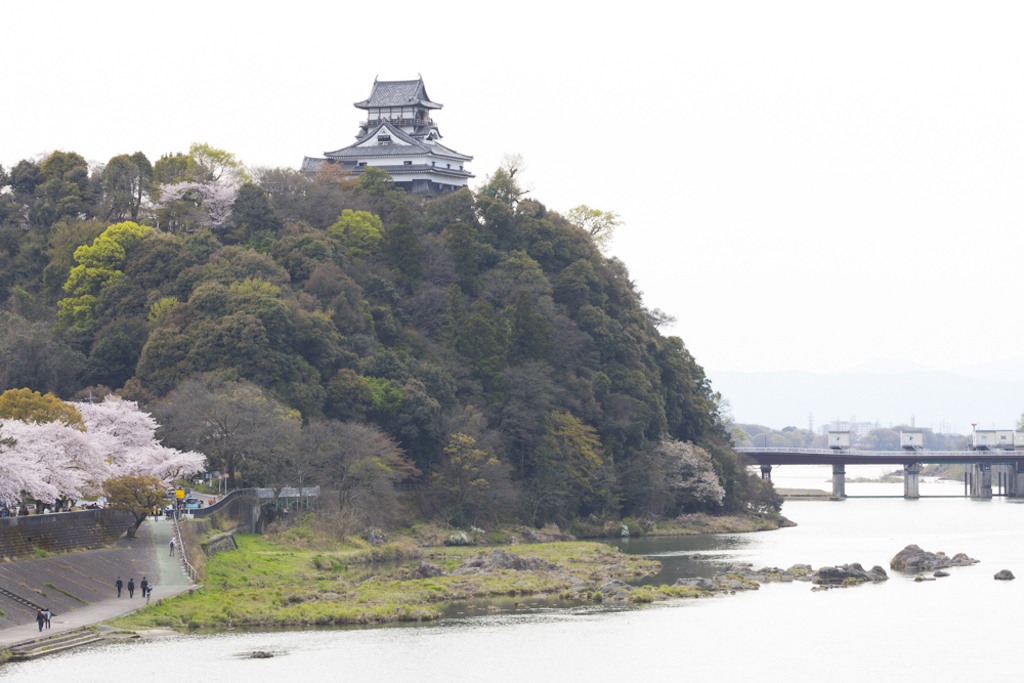
Inuyama Castle stands on a hill overlooking the gently flowing Kiso River at the border between Aichi and Gifu prefectures. The castle is believed to have been built in 1537 by Oda Nobuyasu, uncle of the famed warlord Oda Nobunaga. Beneath the blue sky, the imposing main keep rises proudly – a three-tiered, four-storey structure with two basement levels. The rare and valuable bōrōgata (watchtower-style) keep features a two-tiered tower base topped by a small watchtower, and is regarded as the oldest of its kind still standing in Japan.
Note: The term “bōrōgata” refers to a style of castle tower characteristic of early Japanese castles, with a prominent watchtower set atop a two- to three-tiered base.
With sheer cliffs rising behind it and the Kiso River flowing below, Inuyama Castle is a textbook example of an ushiro-kengo (“rear-fortified”) fortress. The castle and its surrounding town were enclosed together within the outer moat – a design clearly suited to its role as a military stronghold.
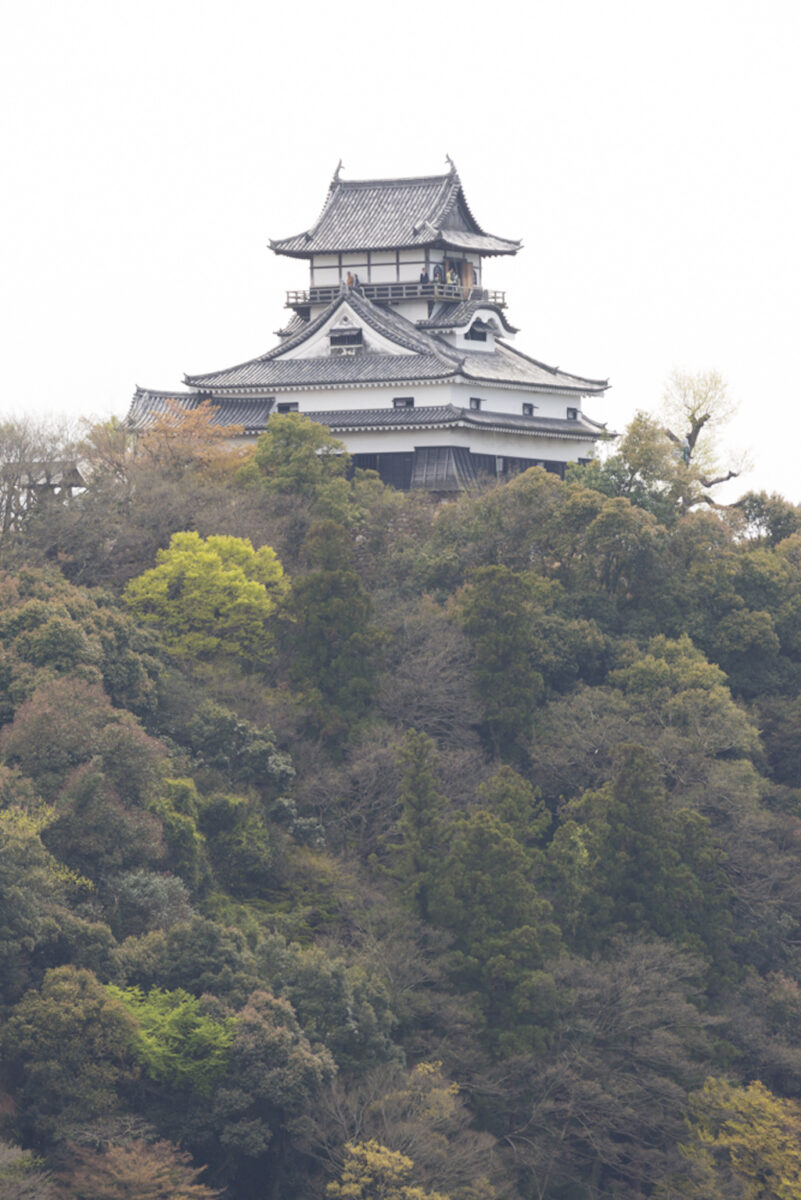
And yet, despite its strategic design, this riverside fortress – also known by the poetic name Hakuteijō (White Emperor Castle) – has long been admired for its beauty. Historical records show that many came simply to gaze upon it. Built in the midst of the bloody Sengoku (Warring States) period, Inuyama Castle retains an unexpected elegance. Seen from across the Kiso River in this place where even warlords Tokugawa Ieyasu and Toyotomi Hideyoshi once passed through, the castle appears to stand serenely, untouched by the chaos of war. This is a castle with a strangely peaceful presence, as if quietly defying the turbulence of its time.
After Oda Nobuyasu, the castle passed rapidly from one lord to another, including Ikeda Tsuneoki, Ishikawa Mitsuyoshi, and Ogasawara Yoshitsugu. With the arrival of the Edo period, however, Inuyama Castle came under the control of Naruse Masanari, a senior retainer of the Tokugawa family. From that point on, the Naruse family remained the castle’s lords until the end of the feudal era. Remarkably, Inuyama Castle survived both the Ikkoku Ichijōrei (One Castle per Province) decree issued in the early 1600s to prevent rebellions, and the Meiji government’s haihan chiken reforms that led to the abolition of the feudal domains and the wholesale destruction of feudal castles. Although Inuyama Castle briefly came under prefectural ownership, the 1895 Nōbi Earthquake led to its return to the Naruse family. Astonishingly, until as recently as 2004, it remained not only a privately-owned castle but also a privately-owned National Treasure.
We spoke with Junko Naruse – widely known as “Japan’s last real princess” – who has begun a new chapter alongside Inuyama Castle, a site with one of the rarest and most remarkable histories in Japan.
Inuyama Castle: Part of the Naruse Family
The Naruse family has maintained stewardship of Inuyama Castle for over 400 years and, to them, the castle is as irreplaceable as a family member. “Inuyama Castle seems to be in a good mood today”, says Junko Naruse with a smile, standing beneath a cherry tree in full bloom, with the castle in the background. She is the daughter of the 12th lord of the Naruse family and the person responsible for transitioning the castle into a public foundation. When asked, half-jokingly, “The castle’s in a good mood?”, she laughs and replies, “To the Naruse family, Inuyama Castle is like family – a troublesome little brother always needing attention!”
“Inuyama Castle is honestly so self-centred and stubborn,” Junko Naruse laughs. “The weather is always perfectly clear when the castle is the focus of a photo shoot, but whenever I’m supposed to be the main subject, it rains. Until quite recently, people used to joke that it was impossible to get a photo of me and the castle together! But that’s exactly why I love it, quirks and all. The castle is such a charmer – like a handsome guy who loves to be admired!”
In 2017, the Naruse family marked exactly 400 years of stewardship of Inuyama Castle. The Naruse clan, who served as tsukegarō to the Owari branch of the Tokugawa family, had long treasured Inuyama Castle, a gift from the Tokugawa shogunate.
Note: Tsukegarō refers to powerful hereditary retainers appointed by Tokugawa Ieyasu to support the three main Tokugawa families. The Naruse family was one of the “Five Families” with the rare privilege of being able to meet directly with the shogun.
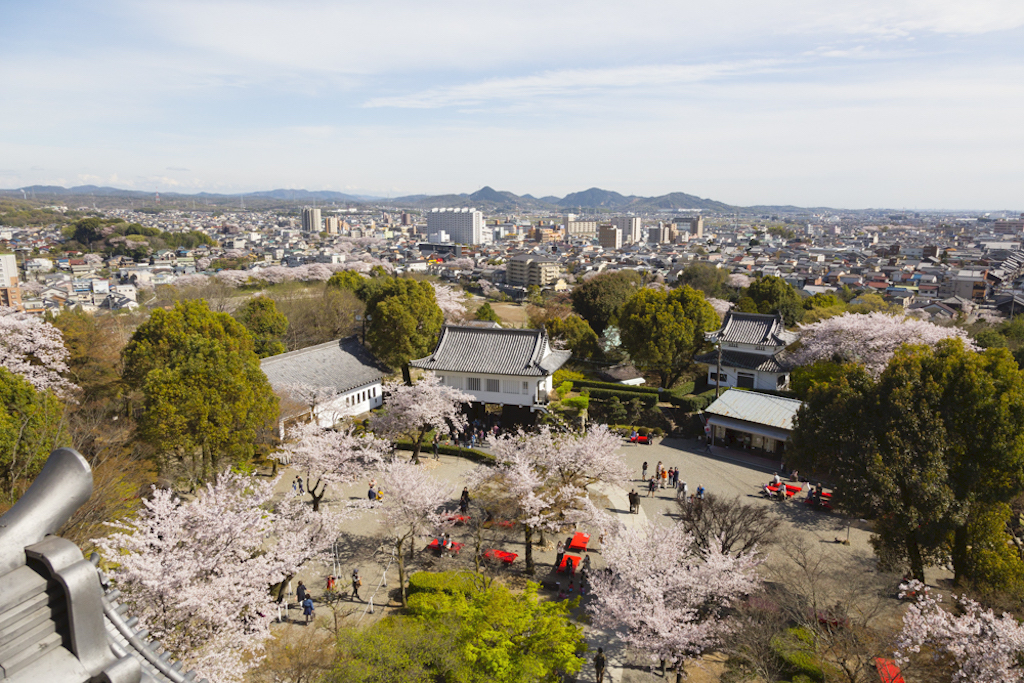
During the time of the 9th lord, Masamitsu, the Edo shogunate came to an end and Japan entered the Meiji era. Following the haihan chiken reforms, most of the castle buildings were torn down, with only the main keep left standing. Around twenty years later, the devastating Nōbi Earthquake of 1891 caused extensive damage to the keep. There was even talk of abandoning the castle entirely. However, local residents petitioned strongly for its preservation and, in response, Aichi Prefecture transferred ownership back to the Naruse family on the condition that they would carry out the repairs.
Although no money changed hands in the transfer, the cost of restoring the keep at that time was 4,500 yen – an amount that would be worth several hundred million yen today. Thanks to the Naruse family’s determined fundraising efforts and the generous donations from the townspeople of Inuyama, the castle was successfully restored and has survived into the present day. This event marked the beginning of the Naruse family’s unexpected return as modern-day “lords of the castle”.
“Inuyama Castle just seems to find its way back to the Naruse family, somehow”, Junko Naruse muses. “Even now, I think it still sees me as its personal retainer”.
So what kind of family was the Naruse clan, once senior retainers of the Owari domain?
Naruse Masanari: Tokugawa Ieyasu’s Favourite Protégé
Naruse Masanari, the first of his family to become lord of Inuyama Castle, entered the Tokugawa household as a young page when he was just seven or eight years old. Having researched old family documents and historical records, Junko Naruse reflects on what that time might have been like:
“At the time, Ieyasu was in his thirties. I imagine the tiny Masanari, eager to be useful, dashing around, and that Ieyasu found him endearing. I wouldn’t be surprised if Ieyasu personally took the time to teach him things. And from Masanari’s point of view, the very first warlord he encountered up close was Ieyasu, right in his prime. That must have made a powerful impression, even on a child.
“He must have thought, ‘I’m going to follow this man for the rest of my life. I’ll help make him the ruler of the land’”.
There’s another story about Masanari that shows just how deep his loyalty ran. Toyotomi Hideyoshi once tried to recruit him, offering 50,000 koku (a huge amount of land and income) if he would become his retainer. When Ieyasu instructed him to go to Hideyoshi for diplomatic purposes, Masanari responded with the words, “One cannot not serve two masters”, and declared his intent to commit seppuku. Alarmed, Ieyasu quickly withdrew the order.
“It’s written that Masanari shed quiet tears at the time”, Junko Naruse says. “It’s hard to believe that a hardened samurai could really have done that, but the bond between him and Ieyasu must have been more like family than lord and vassal.”
A Trusted Tokugawa Retainer – A Man of Strength, Kindness and Strict Family Values
Held in high regard by Tokugawa Ieyasu and respected by those around him, Naruse Masanari eventually became a tsukegarō (attached senior retainer), after which the Naruse family continued for generations as lords of Inuyama Castle and retainers to the Owari domain. Masanari’s upright character is evident not only in his unwavering loyalty to a single master, but also in the goikun – precepts passed down within the Naruse family.
“One instruction says a lord must not rush to punish a retainer who causes a problem”, Junko Naruse explains. “Another says a leader should attend important drinking gatherings, but must not linger too long.”
The first precept teaches that even someone who has committed an offence deserves to be heard. In fact, the eighth lord, Masazumi, is said to have listened patiently to a samurai retainer who defied orders and refused to present himself at the castle – for nearly three years! The second shows a concern for younger retainers: a superior lingering at a party would prevent them from relaxing. Such ideas were rare for the period, and they suggest that Naruse Masanari was a forward-thinking leader with both discipline and empathy.
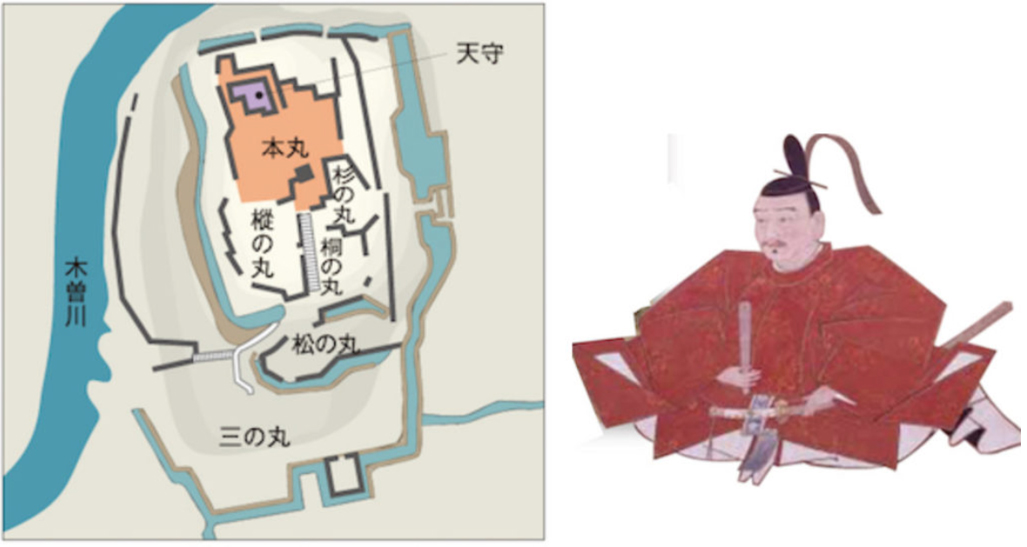
(Right) Portrait of Naruse Masanari, first lord of the Naruse family, who served Tokugawa Ieyasu as a close retainer throughout his life. Known for his strict sense of justice, he once disowned his heir, Masatora, for leading a dissolute youth. It is said that Ieyasu personally intervened to reconcile father and son. Held at Hakurinji Temple (Naka-ku, Nagoya).
Free Spirits or Steadfast Stewards: Alternating Generations Who Cherished Their Castle
The teachings of the first lord, Masanari, were carefully passed down through the generations, and the Naruse family continued to support the Owari Tokugawa clan with a firm commitment to duty.
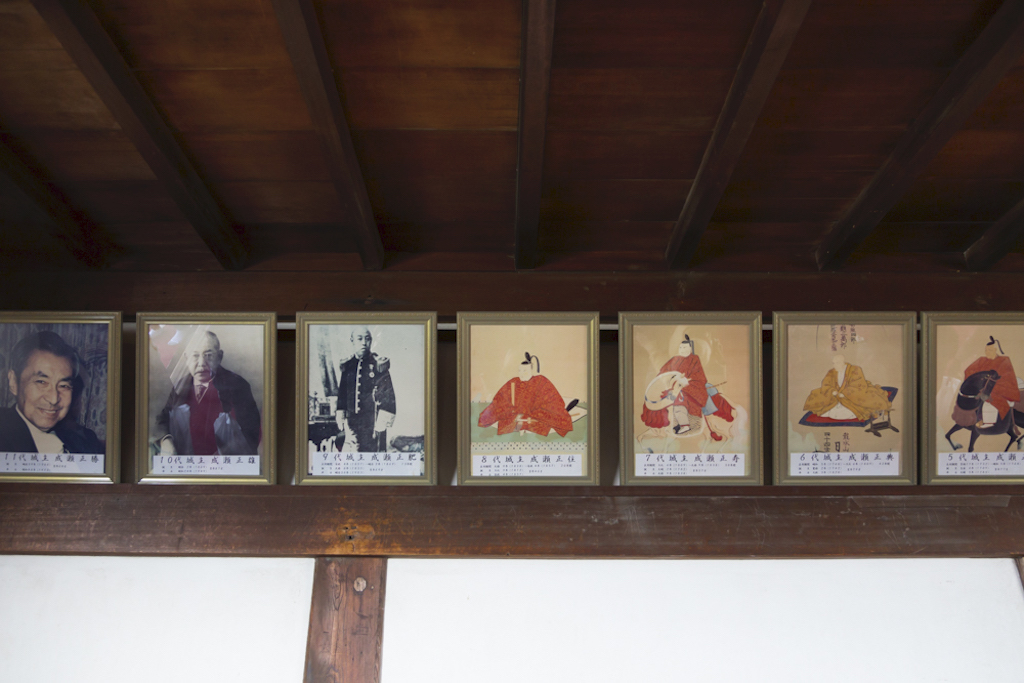
“Curiously, many of the even-numbered lords were free spirits who favoured poetry and the arts”, Junko Naruse says. “The odd-numbered lords were often more practically-minded, and it is the odd generations who have been responsible for the castle’s repairs.”
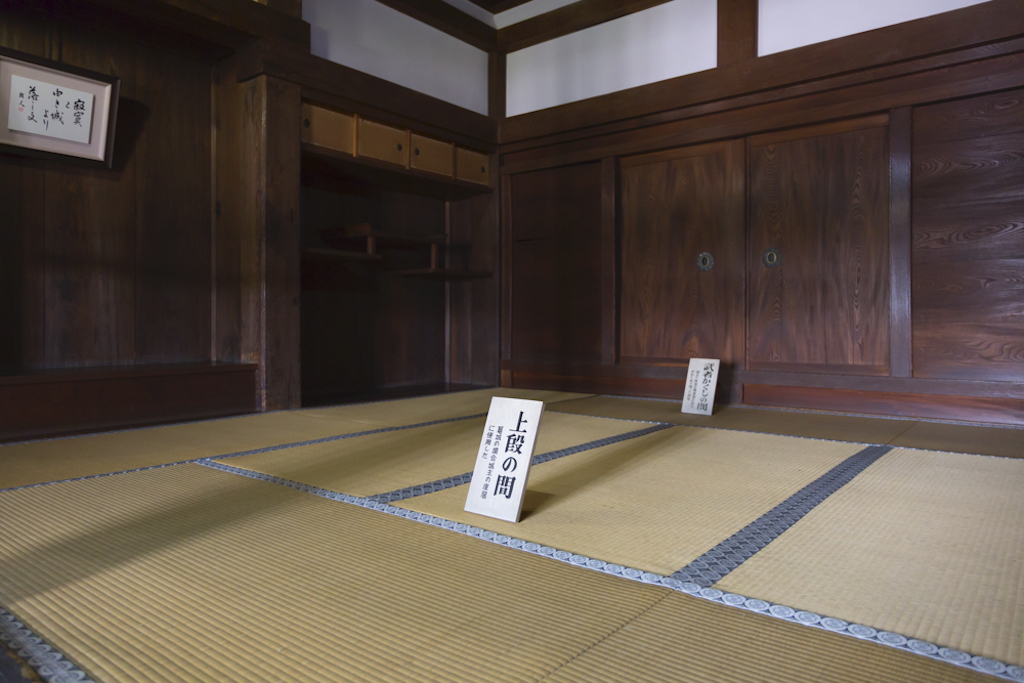
Some lords spent little time at Inuyama Castle, but each generation left its mark. The third lord had a water clock built inside the main gate, and the seventh created the upper audience chamber.
And now, in modern times, Junko Naruse, the thirteenth head of the Naruse family, has taken the helm, steering Inuyama Castle confidently into the future. She deeply values the dignity of this castle, preserved by a family of distinguished samurai with roots in the Sengoku era.
“As I delve into this history, I feel my own way of life becoming clearer. I’m proud that Inuyama Castle has been protected for generations by a family of distinguished Sengoku warriors. For that reason, I want to cherish the dignity of the castle. To do that, I have to live and act in a way that does not diminish Inuyama Castle’s grace – I have to protect it”, says Junko Naruse.
Currently, 99% of Japanese castles are owned by government authorities, with Inuyama Castle being the only one owned by a foundation. Junko Naruse believes this unique status, along with its history of private ownership until recently, gives Inuyama Castle a “living” atmosphere unlike any other castle. To preserve this special feeling and pass it on to future generations, the Naruse family’s long-held wish was fulfilled in 2004, when the castle was incorporated as a foundation.
Determined at 36 to Protect Inuyama Castle
In a heartfelt tribute to her father, Masatoshi Naruse, Junko says, “The Naruse family has struggled financially to protect Inuyama Castle, sometimes to the point of risking the family’s stability. Though my family lived in Tokyo, I remember my parents staying up all night watching the news whenever a typhoon approached Inuyama. Just repairing a single door can cost several million yen.”
In the past, only feudal lords with land and income of 20,000 koku or more could own a castle. This reflects the great expense involved in maintaining a castle. Even today, it’s easy to imagine how difficult it must be for a private individual to own a castle. The Naruse family made several attempts to establish a foundation but, due to the castle being a designated National Treasure, the process was slow and challenging.
At the age of 36, Junko Naruse made the decision to accept the stewardship of Inuyama Castle. Believing that the only way to protect the castle was through an incorporated foundation, she spent four years working tirelessly to achieve this. Finally, she succeeded in establishing the Public Interest Incorporated Foundation, Inuyamajo Hakutei Bunko.
At the time, Junko Naruse’s father, the 12th lord and final master of Inuyama Castle Masatoshi Naruse, was bedridden with a serious illness. When Junko informed him that the foundation had been established, he expressed a difficult wish:
“My role is complete. Perhaps it’s time I took my leave.” Junko replied, “No – you must hold on for another four years, until we receive formal approval.”
She spoke from the heart, desperate for her father to remain living. Though Masatoshi, suffering from his illness, scolded her as a “disrespectful daughter”, he did indeed hold on, and passed away exactly four years and four days later, beneath cherry trees laden with blossoms.
It was a remarkable ending – the final lord of Inuyama Castle saw his beloved daughter off on a new path, and then made his quiet exit from the stage.
From Private Legacy to Public Treasure: A New Chapter for Inuyama Castle
“My father was the last lord of Inuyama Castle, and I am the thirteenth member of the Naruse family to protect it, and its first foundation director,” says Junko Naruse. “I hope Inuyama Castle can continue to live on with the understanding and support of the people around it.”
Inuyama Castle has become the heart of tourism in Inuyama City, drawing around half a million visitors each year. To avoid having to close off areas as restoration work is undertaken, the work is carried out in a way that allows it to be seen – visible restoration.
To achieve this, the team spent over ten years surveying the castle’s condition and working with experts to develop methods that allow repairs to be carried out without disrupting the visitor experience.
“Inuyama Castle is one of the very few in Japan that funds its own repairs. We use the admission fees from visitors to ensure the castle will continue to be loved into the future.”
Built in the Sengoku period, Inuyama Castle has stepped into a new era – from Heisei to Reiwa, and beyond.